Sticky Note

I'm on a blogging break, but will be checking in from time to time. Thanks for stopping by!

Saturday, February 21, 2009

Faith 'n Fiction Saturdays ~ Biblical Fiction


Today for Faith 'n Fiction Saturday...


One of area of Christian fiction that is thriving is Biblical Fiction. Biblical fiction, in case you don't know, is when an author takes a story from the Bible and imagines more of the details. Tosca Lee's Havah would be a recent example of Biblical fiction.

What I want to know today is how you feel about Biblical fiction. Have you ever read any Biblical fiction? Did you enjoy it? Do you think Biblical fiction helps us to understand people who lived during Biblical times better or do you think that it's unnecessary? Have you ever read any Biblical fiction that offended you?


I've only read a few Biblical fiction books but I have enjoyed them. I am fine with them as long as they don't distort the Bible. I did enjoy Havah by Tosca Lee. There is certainly not much information in the Bible about Eve and I thought Tosca did a great job of her "it could have been like this" story telling. I read Biblical fiction knowing full well that it is "fiction" and nothing else. But I also like how it gets me thinking deeper into the Biblical characters and what was going on in their lives and the culture at that time.

Tuck by Stephen Lawhead

It is time for a FIRST Wild Card Tour book review! If you wish to join the FIRST blog alliance, just click the button. We are a group of reviewers who tour Christian books. A Wild Card post includes a brief bio of the author and a full chapter from each book toured. The reason it is called a FIRST Wild Card Tour is that you never know if the book will be fiction, non~fiction, for young, or for old...or for somewhere in between! Enjoy your free peek into the book!

You never know when I might play a wild card on you!


Today's Wild Card author is:


and the book:


Tuck

Thomas Nelson (February 17, 2009)


ABOUT THE AUTHOR:


Stephen R. Lawhead is an internationally acclaimed author of mythic history and imaginative fiction. His works include Byzantium, Patrick, and the series The Pendragon Cycle, The Celtic Crusades, and The Song of Albion.

Stephen was born in 1950, in Nebraska in the USA. Most of his early life was spent in America where he earned a university degree in Fine Arts and attended theological college for two years. His first professional writing was done at Campus Life magazine in Chicago, where he was an editor and staff writer. During his five years at Campus Life he wrote hundreds of articles and several non-fiction books.

After a brief foray into the music business—as president of his own record company—he began full-time freelance writing in 1981. He moved to England in order to research Celtic legend and history. His first novel, In the Hall of the Dragon King, became the first in a series of three books (The Dragon King Trilogy) and was followed by the two-volume Empyrion saga, Dream Thief and then the Pendragon Cycle, now in five volumes: Taliesin, Merlin, Arthur, Pendragon, and Grail. This was followed by the award-winning Song of Albion series which consists of The Paradise War, The Silver Hand, and The Endless Knot.

He has written nine children's books, many of them originally offered to his two sons, Drake and Ross. He is married to Alice Slaikeu Lawhead, also a writer, with whom he has collaborated on some books and articles. They make their home in Oxford, England.

Stephen's non-fiction, fiction and children's titles have been published in twenty-one foreign languages. All of his novels have remained continuously in print in the United States and Britain since they were first published. He has won numereous industry awards for his novels and children's books, and in 2003 was awarded an Honorary Doctorate of Humane Letters by the University of Nebraska.


Visit the author's website.

Product Details:

List Price: $26.99
Hardcover: 464 pages
Publisher: Thomas Nelson (February 17, 2009)
Language: English
ISBN-10: 1595540873
ISBN-13: 978-1595540874

AND NOW...THE FIRST CHAPTER:


Prologue

Wintan Cestre

Saint Swithun’s Day


King William stood scratching the back of his hand and watched as another bag of gold was emptied into the ironclad chest: one hundred solid gold byzants that, added to fifty pounds in silver and another fifty in letters of promise to be paid upon collection of his tribute from Normandie, brought the total to five hundred marks. “More money than God,” muttered William under his breath. “What do they do with it all?”

“Sire?” asked one of the clerks of the justiciar’s office, glancing up from the wax tablet on which he kept a running tally.

“Nothing,” grumbled the king. Parting with money always made him itch, and this time there was no relief. In vain, he scratched the other hand. “Are we finished here?”

Having counted the money, the clerks began locking and sealing the strongbox. The king shook his head at the sight of all that gold and silver disappearing from sight. These blasted monks will bleed me dry, he thought. A kingdom was a voracious beast that devoured money and was never, ever satisfied. It took money for soldiers, money for horses and weapons, money for fortresses, money for supplies to feed the troops, and as now, even more money to wipe away the sins of war. The gold and silver in the chest was for the abbey at Wintan Cestre to pay the monks so that his father would not have to spend eternity in purgatory or, worse, frying in hell.

“All is in order, Majesty,” said the clerk. “Shall we proceed?”

William gave a curt nod.

Two knights of the king’s bodyguard stepped forward, took up the box, and carried it from the room and out into the yard where the monks of Saint Swithun’s were already gathered and waiting for the ceremony to begin. The king, a most reluctant participant, followed.

In the yard of the Red Palace—the name given to the king’s sprawling lodge outside the city walls—a silken canopy on silver poles had been erected. Beneath the canopy stood Bishop Walkelin with his hands pressed together in an attitude of patient prayer. Behind the bishop stood a monk bearing the gilded cross of their namesake saint, while all around them knelt monks and acolytes chanting psalms and hymns. The king and his attendants—his two favourite earls, a canon, and a bevy of assorted clerks, scribes, courtiers, and officials both sacred and secular—marched out to meet the bishop. The company paused while the king’s chair was brought and set up beneath the canopy where Bishop Walkelin knelt.

“In the Holy Name,” intoned the bishop when William Rufus had taken his place in the chair, “all blessing and honour be upon you and upon your house and upon your descendants and upon the people of your realm.”

“Yes, yes, of course,” said William irritably. “Get on with it.”

“God save you, Sire,” replied Walkelin. “On this Holy Day we have come to receive the Beneficium Ecclesiasticus Sanctus Swithinius as is our right under the Grant of Privilege created and bestowed by your father King William, for the establishment and maintenance of an office of penitence, perpetual prayer, and the pardon of sins.”

“So you say,” remarked the king.

Bishop Walkelin bowed again, and summoned two of his monks to receive the heavy strongbox from the king’s men in what had become an annual event of increasing ceremony in honour of Saint Swithun, on whose day the monks determined to suck the lifeblood from the crown, and William Rufus resented it. But what could he do? The payment was for the prayers of the monks for the remission of sins on the part of William Conqueror, prayers which brought about the much-needed cleansing of his besmirched soul. For each and every man that William had killed in battle, the king could expect to spend a specified amount of time in purgatory: eleven years for a lord or knight, seven years for a man-at-arms, five for a commoner, and one for a serf. By means of some obscure and complicated formula William had never understood, the monks determined a monetary amount which somehow accorded to the number of days a monk spent on his knees praying. As William had been a very great war leader, his purgatorial obligation amounted to well over a thousand years—and that was only counting the fatalities of the landed nobility. No one knew the number of commoners and serfs he had killed, either directly or indirectly, in his lifetime—but the number was thought to be quite high. Still, a wealthy king with dutiful heirs need not actually spend so much time in purgatory—so long as there were monks willing to ease the burden of his debt through prayer. All it took was money.

Thus, the Benefice of Saint Swithun, necessary though it might be, was a burden the Conqueror’s son had grown to loathe with a passion. That he himself would have need of this selfsame service was a fact that he could neither deny, nor escape. And while he told himself that paying monks to pray souls from hell was a luxury he could ill afford, deep in his heart of hearts he knew only too well that—owing to the debauched life he led—it was also a necessity he could ill afford to neglect much longer.

Even so, paying over good silver for the ongoing service of a passel of mumbling clerics rubbed Rufus raw—especially as that silver became each year more difficult to find. His taxes already crushed the poor and had caused at least two riots and a rebellion by his noblemen. Little wonder, then, that the forever needy king dreaded the annual approach of Saint Swithun’s day and the parting with so much of his precious treasury.

The ceremony rumbled on to its conclusion and, following an especially long-winded prayer, adjourned to a feast in honour of the worthy saint. The feast was the sole redeeming feature of the entire day. That it must be spent in the company of churchmen dampened William’s enthusiasm somewhat, but did not destroy it altogether. The Red King had surrounded himself with enough of his willing courtiers and sycophants to ensure a rousing good time no matter how many disapproving monks he fed at his table.

This year, the revel reached such a height of dissipation that Bishop Walkelin quailed and excused himself, claiming that he had pressing business that required his attention back at the cathedral. William, forcing himself to be gracious, wished the churchmen well and offered to send a company of soldiers to accompany the monks back to the abbey with their money lest they fall among thieves.

Walkelin agreed to the proposal and, as he bestowed his blessing, leaned close to the king and said, “We must talk one day soon about establishing a benefice of your own, Your Majesty.” He paused and then, like the flick of a knife, warned, “Death comes for us all, and none of us knows the day or time. I would be remiss if I did not offer to draw up a grant for you.”

“We will discuss that,” said William, “when the price is seen to fall rather than forever rise.”

“You will have heard it said,” replied Walkelin, “that where great sin abounds, great mercy must intercede. The continual observance and maintenance of that intercession is very expensive, my lord king,”

“So is the keeping of a bishop,” answered William tartly. “And bishops have been known to lose their bishoprics.” He paused, regarding the cleric over the rim of his cup. “Heaven forbid that should happen. I know I would be heartily sorry to see you go, Walkelin.”

“If my lord is displeased with his servant,” began the bishop, “he has only to—”

“Something to consider, eh?”

Bishop Walkelin tried to adopt a philosophical air. “I am reminded that your father always—”

“No need to speak of it any more just now,” said William smoothly. “Only think about what I have said.”

“You may be sure,” answered Walkelin. He bowed stiffly and took a slow step backwards. “Your servant, my lord.”

The clerics departed, leaving the king and his courtiers to their revel. But the feast was ruined for William. Try as he might, he could not work himself into a festive humour because the bishop’s rat of a thought had begun to gnaw at the back of his mind: his time was running out. To die without arranging for the necessary prayers would doom his soul to the lake of everlasting fire. However loudly he might rail against the expense—and condemn the greedy clerics who held his future for ransom—was he really prepared to test the alternative at the forfeit of his soul?


Part I

Come listen a while, you gentlefolk alle,

That stand this bower within,

A tale of noble Rhiban the Hud,

I purpose now to begin.


Young Rhiban was a princeling fayre,

And a gladsome heart had he.

Delight took he in games and tricks,

And guiling his fair ladye.


A bonny fine maide of noble degree,

Mérian calléd by name,

This beauty soote was praised of alle men

For she was a gallant dame.


Rhiban stole through the greenwoode one night

To kiss his dear Mérian late.

But she boxed his head till his nose turn’d red

And order’d him home full straight.


Though Rhiban indeed speeded home fayrlie rathe,

That night he did not see his bed.

For in flames of fire from the rooftops’ eaves,

He saw all his kinsmen lay dead.


Ay, the sheriff’s low men had visited there,

When the household was slumbering deepe.

And from room to room they had quietly crept

And murtheréd them all in their sleepe.


Rhiban cried out ‘wey-la-wey!’

But those fiends still lingered close by.

So into the greenwoode he quickly slipt,

For they had heard his cry.


Rhiban gave the hunters goode sport,

Full lange, a swift chase he led.

But a spearman threw his shot full well

And he fell as one that is dead.


1


Tuck shook the dust of Caer Wintan off his feet and prepared for the long walk back to the forest. It was a fine, warm day, and all too soon the friar was sweltering in his heavy robe. He paused now and then to wipe the sweat from his face, falling farther and farther behind his travelling companions. “These legs of mine are sturdy stumps,” he sighed to himself, “but fast they en’t.”

He had just stopped to catch his breath a little when, on sudden impulse, he spun around quickly and caught a glimpse of movement on the road behind—a blur in the shimmering distance, and then gone. So quick he might have imagined it. Only it was not the first time since leaving the Royal Lodge that Tuck had entertained the queer feeling that someone or something was following them. He had it again now, and decided to alert the others and let them make of it what they would.

Squinting into the distance, he saw Bran far ahead of the Grellon, striding steadily, shoulders hunched against the sun and the gross injustice so lately suffered at the hands of the king in whom he had trusted. The main body of travellers, unable to keep up with their lord, was becoming an ever-lengthening line as heat and distance mounted. They trudged along in small clumps of two or three, heads down, talking in low, sombre voices. How like sheep, thought Tuck, following their impetuous and headstrong shepherd.

A more melancholy man might himself have succumbed to the oppressive gloom hanging low over the Cymry, dragging at their feet, pressing their spirits low. Though summer still blazed in meadow, field, and flower, it seemed to Tuck that they all walked in winter’s drear and dismal shadows. Rhi Bran and his Grellon had marched into Caer Wintan full of hope—they had come singing, had they not?—eager to stand before King William to receive the judgement and reward that had been promised in Rouen all those months ago. Now, here they were, slinking back to the greenwood in doleful silence, mourning the bright hope that had been crushed and lost.

No, not lost. They would never let it out of their grasp, not for an instant. It had been stolen—snatched away by the same hand that had offered it in the first place: the grasping, deceitful hand of a most perfidious king.

Tuck felt no less wounded than the next man, but when he considered how Bran and the others had risked their lives to bring Red William word of the conspiracy against him, it fair made his priestly blood boil. The king had promised justice. The Grellon had every right to expect that Elfael’s lawful king would be restored. Instead, William had merely banished Baron de Braose and his milksop nephew Count Falkes, sending them back to France to live in luxury on the baron’s extensive estates. Elfael, that small bone of contention, had instead become property of the crown and placed under the protection of Abbot Hugo and Sheriff de Glanville. Well, that was putting wolves in charge of the fold, was it not?

Where was the justice? A throne for a throne, Bran had declared that day in Rouen. William’s had been saved—at considerable cost and risk to the Cymry—but where was Bran’s throne?

S’truth, thought Tuck, wait upon a Norman to do the right thing and you’ll be waiting until your hair grows white and your teeth fall out.

“How long, O Lord? How long must your servants suffer?” he muttered. “And, Lord, does it have to be so blasted hot?”

He paused to wipe the sweat from his face. Running a hand over his round Saxon head, he felt the sun’s fiery heat on the bare spot of his tonsure; sweat ran in rivulets down the sides of his neck and dripped from his jowls. Drawing a deep breath, he tightened his belt, hitched up the skirts of his robe, and started off again with quickened steps. Soon his shoes were slapping up the dust around his ankles and he began to overtake the rearmost members of the group: thirty souls in all, women and children included, for Bran had determined that his entire forest clan—save for those left behind to guard the settlement and a few others for whom the long journey on foot would have been far too arduous—should be seen by the king to share in the glad day.

The friar picked up his pace and soon drew even with Siarles: slim as a willow wand, but hard and knotty as an old hickory root. The forester walked with his eyes downcast, chin outthrust, his mouth a tight, grim line. Every line of him bristled with fury like a riled porcupine. Tuck knew to leave well enough alone and hurried on without speaking.

Next, he passed Will Scatlocke—or Scarlet, as he preferred. The craggy forester limped along slightly as he carried his newly acquired daughter, Nia. Against every expectation, Will had endured a spear wound, the abbot’s prison, and the threat of the sheriff’s rope . . . and survived. His pretty dark-eyed wife, Noín, walked resolutely beside him. The pair had made a good match, and it tore at his heart that the newly married couple should have to endure a dark hovel in the forest when the entire realm begged for just such a family to settle and sink solid roots deep into the land—another small outrage to be added to the ever-growing mountain of injustices weighing on Elfael.

A few more steps brought him up even with Odo, the Norman monk who had befriended Will Scarlet in prison. At Scarlet’s bidding, the young scribe had abandoned Abbot Hugo to join them. Odo walked with his head down, his whole body drooping—whether with heat or the awful realization of what he had done, Tuck could not tell.

A few steps more and he came up even with Iwan—the great, hulking warrior would crawl on hands and knees through fire for his lord. It was from Iwan that the friar had received his current christening when the effort of wrapping his untrained tongue around the simple Saxon name Aethelfrith proved beyond him. “Fat little bag of vittles that he is, I will call him Tuck,” the champion had said. “Friar Tuck to you, boyo,” the priest had responded, and the name had stuck. God bless you, Little John, thought Tuck, and keep your arm strong, and your heart stronger.

Next to Iwan strode Mérian, just as fierce in her devotion to Bran as the champion beside her. Oh, but shrewd with it; she was smarter than the others and more cunning—which always came as something of a shock to anyone who did not know better, because one rarely expected it from a lady so fair of face and form. But the impression of innocence beguiled. In the time Tuck had come to know her, she had shown herself to be every inch as canny and capable as any monarch who ever claimed an English crown.

Mérian held lightly to the bridle strap of the horse that carried their wise hudolion, who was, so far as Tuck could tell, surely the last Banfáith of Britain: Angharad, ancient and ageless. There was no telling how old she was, yet despite her age, whatever it might be, she sat her saddle smartly and with the ease of a practiced rider. Her quick dark eyes were trained on the road ahead, but Tuck could tell that her sight was turned inward, her mind wrapped in a veil of deepest thought. Her wrinkled face might have been carved of dark Welsh slate for all it revealed of her contemplations.

Mérian glanced around as the priest passed, and called out, but the friar had Bran in his eye, and he hurried on until he was within hailing distance. “My lord, wait!” he shouted. “I must speak to you!”

Bran gave no sign that he had heard. He strode on, eyes fixed on the road and distance ahead.

“For the love of Jesu, Bran. Wait for me!”

Bran took two more steps and then halted abruptly. He straightened and turned, his face a smouldering scowl, dark eyes darker still under lowered brows. His shock of black hair seemed to rise in feathered spikes.

“Thank the Good Lord,” gasped the friar, scrambling up the dry, rutted track. “I thought I’d never catch you. We . . . there is something . . .” He gulped down air, wiped his face, and shook the sweat from his hand into the dust of the road.

“Well?” demanded Bran impatiently.

“I think we must get off this road,” Tuck said, dabbing at his face with the sleeve of his robe. “Truly, as I think on it now, I like not the look that Abbot Hugo gave me when we left the king’s yard. I fear he may try something nasty.”

Bran lifted his chin. The jagged scar on his cheek, livid now, twisted his lip into a sneer. “Within sight of the king’s house?” he scoffed, his voice tight. “He wouldn’t dare.”

“Would he not?”

“Dare what?” said Iwan, striding up. Siarles came toiling along in the big man’s wake.

“Our friar here,” replied Bran, “thinks we should abandon the road. He thinks Abbot Hugo is bent on making trouble.”

Iwan glanced back the way they had come. “Oh, aye,” agreed Iwan, “that would be his way.” To Tuck, he said, “Have you seen anything?”

“What’s this then?” inquired Siarles as he joined the group. “Why have you stopped?”

“Tuck thinks the abbot is on our tail,” Iwan explained.

“I maybe saw something back there, and not for the first time,” Tuck explained. “I don’t say it for a certainty, but I think someone is following us.”

“It makes sense.” Siarles looked to the frowning Bran. “What do you reckon?”

“I reckon I am surrounded by a covey of quail frightened of their own shadows,” Bran replied. “We move on.”

He turned to go, but Iwan spoke up. “My lord, look around you. There is little enough cover hereabouts. If we were to be taken by surprise, the slaughter would be over before we could put shaft to string.”

Mérian joined them then, having heard a little of what had passed. “The little ones are growing weary,” she pointed out. “They cannot continue on this way much longer without rest and water. We will have to stop soon in any event. Why not do as Tuck suggests and leave the road now—just to be safe?”

“So be it,” he said, relenting at last. He glanced around and then pointed to a grove of oak and beech rising atop the next hill up the road. “We will make for that wood. Iwan—you and Siarles pass the word along, then take up the rear guard.” He turned to Tuck and said, “You and Mérian stay here and keep everyone moving. Tell them they can rest as soon as they reach the grove, but not before.”

He turned on his heel and started off again. Iwan stood looking after his lord and friend. “It’s the vile king’s treachery,” he observed. “That’s put the black dog on his back, no mistake.”

Siarles, as always, took a different tone. “That’s as may be, but there’s no need to bite off our heads. We en’t the ones who cheated him out of his throne.” He paused and spat. “Stupid bloody king.”

“And stupid bloody cardinal, all high and mighty,” continued Iwan. “Priest of the church, my arse. Give me a good sharp blade and I’d soon have him saying prayers he never said before.” He cast a hasty glance at Tuck. “Sorry, Friar.”

“I’d do the same,” Tuck said. “Now, off you go. If I am right, we must get these people to safety, and that fast.”

The two ran back down the line, urging everyone to make haste for the wood on the next hill. “Follow Bran!” they shouted. “Pick up your feet. We are in danger here. Hurry!”

“There is safety in the wood,” Mérian assured them as they passed, and Tuck did likewise. “Follow Bran. He’ll lead you to shelter.”

It took a little time for the urgency of their cries to sink in, but soon the forest-dwellers were moving at a quicker pace up to the wood at the top of the next rise. The first to arrive found Bran waiting at the edge of the grove beneath a large oak tree, his strung bow across his shoulder.

“Keep moving,” he told them. “You’ll find a hollow just beyond that fallen tree.” He pointed through the wood. “Hide yourselves and wait for the others there.”

The first travellers had reached the shelter of the trees, and Tuck was urging another group to speed and showing them where to go when he heard someone shouting up from the valley. He could not make out the words, but as he gazed around the sound came again and he saw Iwan furiously gesturing towards the far hilltop. He looked where the big man was pointing and saw two mounted knights poised on the crest of the hill.

The soldiers were watching the fleeing procession and, for the moment, seemed content to observe. Then one of the knights wheeled his mount and disappeared back down the far side of the hill.

Bran had seen it too, and began shouting. “Run!” he cried, racing down the road. “To the grove!” he told Mérian and Tuck. “The Ffreinc are going to attack!”

He flew to meet Iwan and Siarles at the bottom of the hill.

“I’d best go see if I can help,” Tuck said, and leaving Mérian to hurry the people along, he fell into step behind Bran.

“Just the two of them?” Bran asked as he came running to meet Siarles and Iwan.

“So far,” replied the champion. “No doubt the one’s gone to alert the rest. Siarles and I will take a stand here,” he said, bending the long ashwood bow to string it. “That will give you and Tuck time to get the rest of the folk safely hidden in the woods.”

Bran shook his head. “It may come to that one day, but not today.” His tone allowed no dissent. “We have a little time yet. Get everyone into the wood—carry them if you have to. We’ll dig ourselves into the grove and make Gysburne and his hounds come in after us.”

“I make it six bows against thirty knights,” Siarles pointed out. “Good odds, that.”

Bran gave a quick jerk of his chin. “Good as any,” he agreed. “Fetch along the stragglers and follow me.”

Iwan and Siarles darted away and were soon rushing the last of the lagging Grellon up the hill to the grove. “What do you want me to do?” Tuck shouted.

“Pray,” answered Bran, pulling an arrow from the sheaf at his belt and fitting it to the string. “Pray God our aim is true and each arrow finds its mark.”

Bran moved off, calling for the straggling Grellon to find shelter in the wood. Tuck watched him go. Pray? he thought. Aye, to be sure—the Good Lord will hear from me. But I will do more, will I not? Then he scuttled up the hill and into the wood in search of a good stout stick to break some heads.

Friday, February 20, 2009

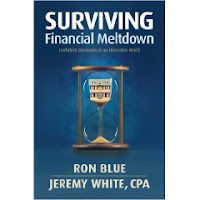
Surviving Financial Meltdown by Ron Blue and Jeremy White

It is time for a FIRST Wild Card Tour book review! If you wish to join the FIRST blog alliance, just click the button. We are a group of reviewers who tour Christian books. A Wild Card post includes a brief bio of the author and a full chapter from each book toured. The reason it is called a FIRST Wild Card Tour is that you never know if the book will be fiction, non~fiction, for young, or for old...or for somewhere in between! Enjoy your free peek into the book!

You never know when I might play a wild card on you!


Today's Wild Card authors are:


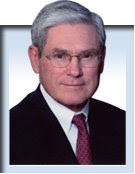
Jeremy White

and the book:


Surviving Financial Meltdown

Tyndale House Publishers (January 20, 2009)


ABOUT THE AUTHORs:


Ron Blue has been a financial planner and consultant for over 30 years. He currently leads an international effort to equip and motivate Christian financial professionals to serve the body of Christ by implementing biblical wisdom in their lives and practices, resulting in financial freedom. Ron has appeared on national radio and television programs and has authored 13 books on personal finance, including the best-seller Master Your Money.

Visit the author's website.

Jeremy Whitehas been a Certified Public Accountant since 1988 with financial experience in public accounting and industry. He’s currently practicing as a partner with Blythe, White & Associates, a certified public accounting and consulting firm in Paducah, KY. Jeremy is a qualified member of Kingdom Advisors. He has coauthored or assisted with four other best-selling financial books including The New Master Your Money, Splitting Heirs, and Your Kids Can Master Their Money.

Visit the author's website.

Product Details:

List Price: $12.99
Paperback: 144 pages
Publisher: Tyndale House Publishers (January 20, 2009)
Language: English
ISBN-10: 1414329954
ISBN-13: 978-1414329956

AND NOW...THE FIRST CHAPTER:


Riding Out Financial Storms

How to Prepare for Economic Uncertainty

Plunging home values. Declining stock market. Vanishing credit. Rising gas prices. Ongoing war against terrorism. Failing banks. Soaring food costs. Falling value of the dollar. Swelling budget deficits. (Suggested cover story for the next Money magazine—Best Investment Now: Antacids!)

If you’re worried, you’re not alone. You’re not the only one feeling the uncertainty. Consumer confidence measurements have reached their lowest level in decades.

Most of the world would still leap at the chance to trade economic situations with you. You realize that. But you’re still nervous and searching for answers.

It’s easy enough to present our case that economic times are challenging. The daily headlines back us up on that. Our challenge in this book is to prepare you so you have less fear and more financial peace.

We want to help you develop a common-sense financial strategy to weather the economic storms of today as well as those in the far-off financial future. In times of economic uncertainty, the strength of your strategy will determine whether you thrive or survive.

Let’s get started with a reminder of how you prepare for tough times: Prepare in advance.

Don’t Let Your Dreams Be Washed Away
The aerial photo is startling: An attractively designed yellow two-story home stands alone on highly sought-after real estate along the Texas Gulf Coast. Just a few days before, that house was part of a thriving community. Now, it is surrounded on every side by the wreckage of about 200 other homes and buildings. A private helicopter pilot, flying over the area after it had been slammed by Hurricane Ike, had taken the photo.

Not long after he posted the image on CNN’s iReport site, the buzz started. Viewers began debating whether the photo was a fake. After all, how could one home withstand 110 mph winds and a storm surge while every other building around it had been pulverized? The speculation ended when the sister of the home’s owners identified it and provided another photo of the house taken just a few months earlier.

Reporters quickly located the home’s owners, Warren and Pam Adams. Just three years before, the Adams’ home had been destroyed by Hurricane Rita. Because they loved the beach, the couple wanted to rebuild rather than leave the coast. So they did—but with the knowledge that their new home might also be in the path of a hurricane some day.

The couple hired an engineering firm to oversee the contractor as their new residence was built. The builder put the house’s bottom floor on wooden columns that raised it above the surrounding houses. The foundation was made with reinforced concrete, and builders followed the latest hurricane building codes to the letter.

Despite its solid construction, the home did sustain some damage in Hurricane Ike. The first-floor garage and a wooden staircase on the home’s exterior were destroyed. The interior suffered some water and mud damage. Yet unlike their neighbors, who returned to their former home sites hoping to find a few personal belongings among the rubble, the Adams can repair their home.

The precautions the couple took when rebuilding their home after Hurricane Rita may have seemed extreme to some. Yet their foresight appears brilliant now after the town sustained a direct hit by a hurricane. In fact, after Aaron Reed, a spokesman with the Texas Parks and Wildlife Department, confirmed that the Adams’ home was the only surviving home on that side of the beach, he added, “I thought, if I were ever to build a house on the coast, I’m going to contact the guy who built this.”1

In fact, the couple simply displayed common sense. They knew that their home had been destroyed once by a hurricane and that it could happen again. Of course, others along the Gulf Coast knew they faced that threat as well. The difference was in how they responded to that risk.

Like some Gulf Coast residents, many of today’s investors build their financial houses without much of a strategy. When you build something you want to keep, common sense dictates that you build it according to a plan and with materials that will last. This strategy works for all types of construction, from putting together a financial portfolio to building a house.

Warren and Kay Adams can’t prevent a hurricane from smashing into their home on the coastline. They can’t control which way the wind blows. They can, however, build their house to withstand the wind and water.

Mr. Blue Goes to Washington
Palms sweating and heart racing, I (Ron) remember climbing the granite steps of the Capitol building to testify as an expert witness before a Senate subcommittee. I entered the chamber room where the hearings took place. I had often seen it on television. It was impressive yet intimidating. The senators were seated higher than the witness table and the visitors’ gallery.

I recognized many of the senators’ names on the plaques at their table and took a deep breath. I reminded myself that I wasn’t in trouble—even though the room had the feel of a courtroom. The Senate subcommittee was holding hearings on “Solutions for the New Era: Jobs and Families.” I was one of several “experts” from various economic and social fields. Other participants on the panel pressed for more social programs.

When my turn to speak came, I was hoping my voice wouldn’t crack. Could I live up to my introduction as a financial expert? Leaning in toward the microphone on the table, I began to answer a senator’s question about what the average American family should do in the current economy to survive and thrive. I said I believed the American family could benefit from following a four-part financial plan:

1. Think long-term with goals and investing

2. Spend less than they earn

3. Maintain liquidity (or emergency savings)

4. Minimize the use of debt

The Senate chamber room fell silent for a moment. I was expecting laughter to reverberate among the marble columns and high ceiling at the simplicity of what I said. The committee chairman, Christopher Dodd, looked down at his notes. He furrowed his brow and pursed his lips. He recited the points back to me. Instead of chuckling at me, he then said, “It seems like this plan is not just for the family. It seems it would work at any income level.”

“Yes,” I replied with some relief. Now I was the one doing a bit of chuckling as I added, “including the U.S. government.” We went on to have an engaging conversation about how the senators could exercise strong leadership through wise financial practices.

Four Principles of Financial Success
I had prepared my four-part answer to the senator’s question over many years. In fact, I heard that same question over and over. After a presentation to a large audience or in response to a call-in radio program, people often ask how to get out of a financial mess—or avoid one. Often the questioners hope that I’ll provide a dramatic, one-time solution for their financial difficulties. Though they may be disappointed to hear my commonsense strategy, I know this time-tested, biblically supported answer works.

Let me briefly expand my explanation of these principles here:

Think long term. The longer term your perspective, the better financial decisions you’ll make. Set goals in writing for the future. Invest for the long term and worry less about short-term ups and downs in your 401(K) or investment portfolio.

Spend less than you earn. To accomplish this, you need to know what you’re earning and what you’re spending. Make a spending plan (or, if we dare use that loathed term: a budget). Monitor how you’re doing. Develop the self-control to avoid overspending. If you spend less than you earn consistently over a long period of time, you will do well financially.

Insert Sidebar 1 here

Maintain emergency savings. A reserve set aside will help you ride out the surprises life throws at you. You must spend less than you earn to build savings. Savings will then help you avoid debt. These principles work together.

Minimize the use of debt. Debt increases risk. It may allow you to do more or have more now, but debt will reduce your ability to have more in the future. I know of few cases of financial disaster occurring without debt. Financial problems are magnified with debt.

These four financial principles are so simple that they may easily be overlooked. Yet they have stood the test of time. They work when the economy is in a recession, depression, or boom times. They work despite inflation or deflation. They apply when gas prices or real estate values are rising or falling. They were outlined thousands of years ago in the Bible. Many rich people—and many poor ones—can attest to their truths.

Some technical professionals, such as doctors and engineers, initially think these principles are too simplistic. They want to make succeeding financially as technically challenging and sophisticated as their fields. But you can’t go wrong if you follow these steps. What kind of financial trouble would you ever get in if you spent less than you earned, minimized debt, kept savings available, and thought about the long term?

When Do I Apply These Principles?
Warren and Kay Adams prepared for possible disaster before it happened. The best time to apply these four steps is before the financial storms come.

Insert Sidebar 2


You may be thinking, Well, it’s too late for that. I’m in the midst of a financial crisis. The hurricane has already hit. Now what do I do? Here’s hope. You start with these four principles of financial success. If you haven’t done them before, then start now. You can’t lay a solid financial foundation without these four steps. They will lead you out of a crisis—and prevent many future ones.

Perhaps your financial crisis has already happened. You may have lost your job. You may be getting calls from creditors. Perhaps you fear a possible foreclosure. You’re picking up the pieces and trying to rebuild. What do you do? Same answer. You start with these principles.

Perhaps you don’t currently face a financial crisis but are anxious because of all the economic bad news. The Adams’s house is a great illustration that may motivate you to prepare for storms in advance. You can take great comfort in these transcendent principles that apply before, during, and after the crisis.

In fact, some positive results can come from our country’s current economic downturn. We’ve learned that a crisis can sharpen our focus. It helps us think more rationally. When gas prices rose significantly, consumers started moving from large sports-utility vehicles and oversized trucks to more fuel-efficient vehicles. This is rational. But even when gas was less expensive, was a Hummer ever a sensible purchase for an urban dweller?

People ask us, “Now that _____________ (you fill in the blank) is happening, what should I do?” we always give the same advice: follow these four principles. If you set long-term goals and invest accordingly, if you spend less than your income, if you have available savings, and if you eliminate debt, then you’ll be as prepared as possible.

No Surprise Ending with This Book—But Keep Reading
We suppose this would make a poor novel. No mystery or suspense here. We’ve already revealed the four principles of financial success and told you the ending of the story. The punch line came before the setup of the joke.

However, we hope you haven’t missed the paradox: these principles are easy to understand but they’re often hard to do. We’ve stated the principles but not yet helped you understand how you can begin doing them. In the coming chapters, we’ll explore these principles in greater detail. You’ll discover how to approach the future—any future—with financial peace of mind.

We realize that it’s not just a matter of doing four simple steps in a vacuum. You’re part of an overall economy. You can’t avoid feeling some of the effects of our nation’s economic downturn—but it doesn’t have to be as great as you fear. You hear things that make you anxious. Money issues carry with them emotions, baggage from the past, and uncertainty about the future. You probably don’t have a degree in financial management. When it comes to handling your own money, you’re probably in unfamiliar territory. So we’re going to begin by exploring what causes financial fears in our economy. Then you’ll identify your particular fears.

You can do this. You can learn to manage your finances wisely. It’s not too late. Reading financial how-to’s is like exercising or eating healthy food. You know you’re supposed to, but will you do it? You can. People with less education, less talent, less income than you have done it. Financial peace of mind can be more than just a future hope. It can be your expectation. In the pages ahead, you will learn how to take this expectation and make it a reality in your life.


Thursday, February 19, 2009

Spring of Candy Apples by Debbie Viguie

It is time for a FIRST Wild Card Tour book review! If you wish to join the FIRST blog alliance, just click the button. We are a group of reviewers who tour Christian books. A Wild Card post includes a brief bio of the author and a full chapter from each book toured. The reason it is called a FIRST Wild Card Tour is that you never know if the book will be fiction, non~fiction, for young, or for old...or for somewhere in between! Enjoy your free peek into the book!

You never know when I might play a wild card on you!


Today's Wild Card author is:


and the book:


Spring of Candy Apples (A Sweet Seasons Novel)


Zondervan (February 1, 2009)


My thoughts:
I'll have to come back and add my full review later, but I have to say that I really enjoyed this book. I've only read the 3rd and 4th books and I thought they were fun and light with a good message, but not preachy. I would be happy for my daughter to read these.


ABOUT THE AUTHOR:


Debbie Viguié has been writing for most of her life. She has experimented with poetry and nonfiction, but her true passion lies in writing novels.

She obtained her Bachelor of Arts degree in Creative Writing from UC Davis. While at Davis she met her husband, Scott, at auditions for a play. It was love at first sight.

Debbie and Scott now live on the island of Kauai. When Debbie is not writing and Scott has time off they love to indulge their passion for theme parks.


The Sweet Seasons Novels:

The Summer of Cotton Candy
The Fall of Candy Corn
The Winter of Candy Canes
The Spring of Candy Apples


Visit the author's website.


Product Details:

List Price: $9.99
Reading level: Young Adult
Paperback: 208 pages
Publisher: Zondervan (February 1, 2009)
Language: English
ISBN-10: 0310717531
ISBN-13: 978-0310717539
AND NOW...THE FIRST CHAPTER:


Once again Candace found herself seated across from a Zone executive. Only this time it wasn’t Lloyd Peterson, the hiring manager; it was John Hanson, owner of the theme park. She tried hard not to squirm in her seat. He was smiling and friendly, but there was so much more at stake this time than a part-time job.

“So, Candace, as one of the five finalists for The Zone Game Master Scholarship, you must be pretty excited,” he said.

Excited. Bewildered. Nervous. So many to choose from. Excited because the winner got a full scholarship to a college in Florida. Bewildered because she still couldn’t believe her Balloon Races doodle could be taken seriously by anyone. Nervous because she didn’t want to blow it.

She’d finally forgiven her friend Josh for secretly entering her in the competition.

“Yes, I’m very excited and pretty nervous,” she admitted.

“Just try to relax,” he urged.

“I’ll try.”

“Now, as you know, there are many stages in the competition and you’ve passed them all to get this far. During the first stage contestants who don’t meet the qualifications are weeded out. Every year I’m surprised to hear how many of those there are. Next the Game Masters take a look at the attraction concepts for viability. Then they announce the top twenty candidates.”

Candace vaguely remembered that and how shocked she had been. She had just doodled her Balloon Races idea for a new them park ride on a napkin. She had been about to throw it away but gave it to Josh instead and he had secretly entered it in the scholarship competition.

“At that point we announce the candidates and give everyone who works for The Zone a chance to submit a recommendation for a candidate. Now, this isn’t just some sort of popularity vote. Recommendations are serious things. The person filling it out has to take the time to submit a ten-page form evaluating your strengths and telling the search committee exactly why they believe you should have the position. Based on the strength and numbers of those recommendations, the group of twenty is narrowed to five.”

“Wow! I can’t believe enough people recommended me,” Candace said, humbled at the amount of work it sounded like that would take.

“Several people here think quite highly of you. You had enough recommendations to just beat out a another young man for the fifth spot.”

“So, I’m here because I had one more recommendation?”

“Basically, yes. It’s policy that we don’t allow contestants to see their recommendations. However, since you are in the top five, I can tell you the people who recommended you.”

Suddenly, Candace realized her heart was in her throat. This somehow made her more nervous than the interview itself. It was a reflection of what people thought of her and how they had chosen to support her. She found herself holding her breath as she waited for the names.

“You had eight recommendations. The first seven came from your supervisor, Martha, Kowabunga referee Josh, Muffin Mansion’s Becca and Gib, Sue from janitorial, Roger from The Dug Out, and Pete the train operator.

None of those came as a great surprise, but Candace was touched and flattered that they would all spend the time and effort on her. She made a mental note to thank them later. That had to mean that the final recommendation that had put her over the top had to come from her boyfriend Kurt. She felt a warm glow as she thought about him.

“And the last one to come in was from Lisa in food carts.”

Candace was stunned. It wasn’t Kurt, who had written a recommendation for her, but rather Lisa, the girl who hated her? “Are you sure about that?” she burst out.

John looked surprised. “Yes. Why?”

“Nothing,” Candace mumbled, dropping her eyes.

The owner of the park chuckled. “Sometimes it’s a surprise when we discover who has actually noticed and thought we’ve done a good job.”

She nodded.

“And so, here you are—one of the final five contestants.”

“What happens now,” Candace asked, still a little unsure about the entire process.

“This is it. I stay out of the selection process until the very end. Now I interview the five candidates and choose the winner.”

Candace had suspected that might be the case but actually knowing it made her even more nervous

“You’ve been doing seasonal work for us, is that right?”

“Yes, sir.”

“You know, I think it’s time to upgrade you. How would you like to work part-time at The Candy Counter?”

“In the Home Stretch?” she asked.

“That would be the one.”

“That would be great,” she said, not sure what else to say at the moment. She hadn’t really had a chance to think about working during the spring. There was a part of her that was instantly excited, though. Working at The Candy Counter meant she wouldn’t be working at a cart.

“So, shall we begin the interview?” he asked, the smile leaving his face.

She nodded mutely.


After the interview, Candace headed straight for the Muffin Mansion. There were no customers inside and Candace made a beeline for Becca, who was manning the cash register. Candace walked around the counter and gave Becca a big hug.

“What was that for?” Becca asked.

“For recommending me! I’ve got a hug for Gib too. Is he here?”

“He should be back from break in a minute.”

“I’ll wait.”

“So, how did the interview go?” Becca asked.

“I’m not sure. I feel like I totally blew it,” Candace confessed.

“Everyone probably felt that way.”

“I don’t know. I’m still not even sure how I’ve gotten this far in the competition.”

“Are you kidding? Balloon Races looks awesome.”

“How do you know?”

Becca smiled. “Josh has been showing a copy of your drawing to everyone.”

Candace rolled her eyes. “Great, one more thing I’ve gotta kill him for.”

“Hey, go easy on the guy. If you get that scholarship you’ll owe him big time for entering you.”

“Yeah, I guess,” Candace admitted.

“What’s with the frown face,” Becca said.

“Kurt didn’t recommend me for the competition,” Candace admitted.

“Ouch,” Becca said, wincing.

“And Lisa did. Isn’t that weird?”

“Definitely freaky.”

“How did your interview go?” a deep voice asked.

Candace jumped off the counter and hugged a surprised Gib. He patted her back awkwardly.

“Thank you for nominating me,” she said.

“No problem. Glad to do it.”

“Kurt didn’t nominate her,” Becca said.

“Knave!” Gib said, his face darkening.

Before Candace could respond, customers streamed through the door. She gave Becca and Gib a little wave and headed out. Once in the clear she headed for the Splash Zone, hoping to catch Josh who had started again a couple of days earlier in anticipation of summer. She saw him in his tank top and shorts in front of the Kowabunga ride.

“You’ve gotta be cold,” she said as she walked up.

“It’s worth it for not sweating through the summer,” he said with his customary grin. “So, how’d it go?”

“I don’t know,” she confessed as she gave him a hug. “But thank you for nominating me. Thank you for entering me,” she said, laughing a little.

“Told you the Balloon Races was cool,” he said.

She stepped back with a laugh. “Remind me to listen to you more.”

“That’s an easy one.”

“So, do you think I have a shot?” she asked.

He grew serious for a moment. “I hope so, but I don’t know. I entered you and I nominated you. That was really all I could do. It’s out of my hands.”

“I know. I’m just nervous.”

She was about to tell him who had nominated her when she remembered she had other news. “I did get a part-time job out of it,” she said.

His eyes widened. “Seriously? Part-time, not seasonal?”

She nodded. “I’m going to be working at The Candy Counter.”

“That’s great! Congratulations. I’m going to miss seeing you on the carts, though.”

She shrugged. “We can still hang on breaks.”

“Absolutely! Well, that is, after the Talent Show. My team and I are practicing a lot.”

Candace blinked at him. “Talent Show? What Talent Show?”

Josh laughed. “Same old Candace.”

Wednesday, February 18, 2009

Tender Grace by Jackina Stark


This week, the

Christian Fiction Blog Alliance

is introducing

Tender Grace

Bethany House (February 1, 2009)

by

Jackina Stark


ABOUT THE AUTHOR:

I have also spoken nationally and internationally at many retreats and seminars and enjoy running into many readers and former students. I have written frequently for both Christian Standard and Lookout, periodicals of Standard Publishing. Years ago I wrote two non-fiction books, published by College Press, but currently out of print. These days, I’m exploring fiction. My first novel, Tender Grace, will be released by Bethany House January 30, 2009, and a second, Things Worth Remembering, will be released in October, 2009. I’m working on new projects, including a third novel, as time permits. Whether speaking or writing, I love the opportunity to tell about Him whom Jesus called “Holy Father” and “the only true God.”

She lives in Joplin, Missouri with her husband, and she spends most of her free time doing is reading and writing. That is what she usually do when she's not teaching, enjoying the children and grandchildren, or sitting on the back porch drinking a Diet Coke and watching her husband till the garden!


ABOUT THE BOOK

Audrey Eaton awakes at three in the morning and gets up to retrieve her husband, Tom, from the recliner where he has fallen asleep watching a ball game. But when she enters the living room and looks at his gentle face in the soft lamp light, she knows their time together is over. Grief attacks her until all she can think about is how much she wants her old life back. Determined to find healing, she embarks on a journey to the one place Tom and she always intended to visit but never did. Along the way, she discovers, through shared experiences with friends old and new, the meaning of the "tender graces" God provides each and every day.

I've quit reading--even bestsellers, even the newspaper, even my Bible. I've also quit listening to music. This lack of appreciation for things I once loved is beginning to define me. More mornings than I can count, I say to myself before I open my eyes, "I don't want to do this." In the days shortly following Tom's death, that made sense, but what does it mean now? That I'm in trouble? One of the best qualities of the former me was thankfulness. As I was trying to sleep last night, needing Tom to be curled up behind me, his left arm slung across me, I realized to my horror that I couldn't remember the last time I was truly thankful. I think of a line from an old hymn: "Awake, my soul, and sing." I miss Tom. I also miss me. Determined to find healing, Audrey Eaton embarks on a trip to the one place she and her husband always intended to visit but never did. When things don't go as planned, will she embrace the unexpected graces that guide her journey?

If you would like to read the first chapter of Tender Grace, go HERE

Tuesday, February 17, 2009

Finding God in the Shack by Randal Rauser

It is time for a FIRST Wild Card Tour book review! If you wish to join the FIRST blog alliance, just click the button. We are a group of reviewers who tour Christian books. A Wild Card post includes a brief bio of the author and a full chapter from each book toured. The reason it is called a FIRST Wild Card Tour is that you never know if the book will be fiction, non~fiction, for young, or for old...or for somewhere in between! Enjoy your free peek into the book!

You never know when I might play a wild card on you!


Today's Wild Card author is:


and the book:


Finding God in the Shack

Authentic (February 3, 2009)


ABOUT THE AUTHOR:


Randal Rauser is associate professor of historical theology at Taylor Seminary, Edmonton, Canada and was granted Taylor’s first annual teaching award for Outstanding Service to Students in 2005. Dr. Rauser’s career as both professor and author has been shaped by his passion for developing a biblically sound apologetic theology that meets the challenges of secular western culture. He is a popular speaker and gifted communicator who seeks to bring the truth of Scripture to bear on the real-life issues of today.

Rauser received his master’s degree in Christian studies at Regent College, later earning a PhD at King’s College London, where he focused on studying the doctrine of the Trinity. Dr. Rauser is the coauthor (with Daniel Hill) of Christian Philosophy A-Z (Edinburgh University Press, 2006) and author of Faith Lacking Understanding (Paternoster) and Theology in Search of Foundations (Oxford University Press, Forthcoming). He has also authored several articles which have appeared in International Journal of Systematic Theology, Heythrop Journal, and Christian Scholars Review. In keeping with his interest in the crossroads of theology and popular culture, Dr. Rauser’s newest book, Finding God in The Shack, explores the theology set forth in The Shack.

Dr. Rauser’s approach to controversial novels like The Shack and The Da Vinci Code distinguishes him from many other evangelical thinkers. “Sometimes we evangelicals possess a certain flatness; we can’t see the beauty of a story. In my opinion, a book like The Shack is not an end in itself. It is part of a conversation,” Dr. Rauser muses. “When a book becomes a catalyst for us to engage people in conversations about who God is instead of the latest update on ‘Brangelina’ or the status of our 401(k)s, we should not miss that opportunity simply because we’re afraid we might make a theological mistake. After all, what work or discourse on theology gets everything right?”

Rauser met his wife, Jasper, a native of Korea, while she was studying English in Vancouver. They have been married since 1999 and have a six-year-old daughter named Jamie and a Lhasa Apso named Sonny. The Rausers currently attend Greenfield Baptist Church in Edmonton, where Dr. Rauser teaches Sunday school and has presented a seminar on the theology of The Shack.

Product Details:

List Price: $14.99
Paperback: 160 pages
Publisher: Authentic (February 3, 2009)
Language: English
ISBN-10: 1606570323
ISBN-13: 978-1606570326

AND NOW...THE FIRST CHAPTER:


Why This Theologian Is Especially Fond of The Shack


As a theologian, I have one big reason to be especially fond of The Shack. To appreciate the source of my gratitude, I need to say a few words about academic theology over the last forty years. (Trust me, this will not be as painful as it sounds!) Our story begins back in the year 1967 when Catholic theologian

Karl Rahner published a little book called The Trinity. There, Rahner observed, “Despite their orthodox confession of the Trinity, Christians are, in their practical life, almost mere ‘monotheists.’ We must be willing to admit that, should the doctrine of the Trinity have to be dropped as false, the major part of religious literature could well remain virtually unchanged.”1


By calling Christians “almost mere monotheists” Rahner meant that their beliefs about God do not differ significantly from other forms of monotheism like Judaism and Islam. But how can this be if, as Christians claim, the very foundation of their belief in God is found in the doctrine of the Trinity? Rahner’s striking claim really shook up theologians as they pondered how it could be that the doctrine which is supposed to be at the heart of our faith was actually somewhere out on the periphery.


Does the Trinity Matter?


Rather than simply take Rahner’s word for it, I would suggest that we test his thesis by way of a little thought experiment. Imagine that the pastor of a typical Baptist church became convinced that the Trinity was false. Instead of believing that God is three persons, he came to believe that God is one person who plays three roles: sometimes he acts as the Father, other times he acts as the Son, and yet other times as the Holy Spirit. This view is called modalism, and it has been considered a heresy by the Christian church since the third century.


Now if the doctrine of the Trinity really is important, we would expect that the pastor’s rejection of it in favor of modalism would send shockwaves throughout the church. But is this really what would happen? I doubt it! On the contrary, I suspect that as long as he continued to mention the Father, Son and Spirit, it wouldn’t matter if he believed they were all the same person. The church would continue on as it always had with its weekly services, Christmas pageants, potlucks, and various ministries. In contrast to this, if our Baptist pastor baptized an infant on Sunday, I bet you would have a church split by Monday! But surely this is strange: why would a peripheral question concerning the practice of baptism be in practice more important for the church’s identity than the supposedly essential doctrine of the Trinity?


Theologians knew that Rahner was right. Although we claim to be trinitarian Christians, this doctrine does not make a difference to the life of the church. But then the theologians faced the challenge of making the Trinity relevant again. They took up this challenge by doing what theologians do best: they wrote books. Lots of books. Lots and lots of books. Some were about the biblical basis of the Trinity. Others talked about the theological or philosophical dimensions of the Trinity. Still others discussed the historical development of the Trinity. And still others talked about the practical and pastoral implications of the Trinity.2


Many of these books were well worth reading. Indeed, some were good enough to qualify as modern classics. And yet, most were only ever read by other theologians which meant that had virtually no impact on the neighborhood church. As a result, we remain stalled in the same place where we were forty years ago: few pastors know how to preach the Trinity, fewer church goers know how to pray the Trinity, and almost no one knows what it would mean to live the Trinity.


At this point you might be wondering whether the doctrine of the Trinity ever made a difference to the church. The answer is yes, it did: the burning torch of Christian truth has burned much brighter in the past. To take one example, if we could hop in a time machine and travel back to the fourth century Roman Empire, we would have encountered a society that debated theology with the same vigor that Canadians today debate hockey. At that time, big questions were at stake as Christians debated a heretical view called Arianism which said that Jesus was God’s greatest creation.


The fierce public debate between orthodox Christianity and Arianism so consumed the general public that average people would jump into theological debates at the slightest provocation. Strangers in the streets would get into fierce debates over various scriptural passages: for instance, how should we understand the claim that Jesus is God’s “only begotten son” (John 3:16)? Did the text mean, as the Arians claimed, that Jesus was God’s first creation? Or, as the orthodox Christians argued, was Jesus eternally begotten by and equal to God the Father? People of the time were passionate about these questions, for they recognized that the heart of Christianity was at stake.


We have a snapshot of the debate from Gregory of Nyssa, a bishop of the time. He wrote: “If in this city you ask anyone for change, he will discuss with you whether the Son is begotten or unbegotten. If you ask about the quality of bread, you will receive the answer that ‘the Father is greater, the Son is less.’ If you suggest that a bath is desirable, you will be told that ‘there was nothing before the Son was created.’ ”3 In other words, theology was to be found everywhere. It found its way into every conversation, every situation. So prevalent was theological discussion that, as Gregory’s weary tone suggests, even the bishops were getting worn out by the debate!


If Christians in the past could wear out their bishops with their theological bravado, why is it that today many Christians think theology is about as exciting as watching paint dry or attending a life insurance seminar? Or to turn the question around, how can we reignite that lost passion? And how can we get average Christians excited about the doctrine of the Trinity, so that it again returns to coffee shop conversations, morning devotions, and the heart of Christian worship?


Rediscovering the Trinity in The Shack


While the answer to our question is surely complex, recently theology has been given a tremendous boost by, of all things, a novel. Not just any novel mind you, for William Paul Young’s The Shack tells a most unlikely story! Not content simply to

reintroduce the Trinity as a doctrine of mere peripheral interest,

the book weaves the triune God into an engaging narrative. Along the way, it goes to the heart of the most horrifying case of evil and then makes the truly bold claim that God as triune is crucial to the process by which healing is coming to this world.


First, let’s say a word about the story itself. The Shack opens with the narrator “Willie” reporting that he has recorded everything as his close friend Mack had instructed him. (Since the name Willie is an obvious reference to author William Young, some readers have assumed that the book is claiming to be a factual account. But Young has made it clear that the book is fictional, albeit with a significant portion of autobiography thrown in.) We then learn that a few years prior to Willie’s writing Mack took three of his children camping. At the end of a wonderful weekend, his son was in a canoeing accident, and in the melee that ensued, his youngest daughter Missy disappeared. Within hours it became clear that she had been abducted by a serial killer known as the Little Lady-Killer. In a matter of hours, the FBI investigation converged on a remote shack where Missy’s bloody dress was discovered, though her body was never found.


Fast-forward three-and-a-half years and Mack continues to struggle with “the Great Sadness.” Then one day he receives an invitation in his mailbox to meet Papa (his wife’s name for God) at the shack. Perplexed and intrigued, Mack secretly travels to the shack on a Friday evening and is met by an African-American woman named Papa, an Asian woman named Sarayu, and a Jewish man named Jesus: all told, a rather unconventional Trinity! Over the next two days Mack communes with the three as he comes to terms with the Great Sadness and embarks on the road to healing and reconciliation.


The book climaxes on Sunday morning when Papa (now in male form) takes Mack on a journey to the place where the killer buried Missy. Together they return her body to the shack for a proper burial, complete with an unforgettable memorial ceremony. After Mack shares a special communion service with Papa, Jesus, and Sarayu, he falls asleep, only to wake up in the dark, cold cabin. Mack then travels back down the mountain where he gets into a serious car accident. As he slowly recovers in the hospital the memories of the weekend gradually return, prompting the question of whether it was just a dream.


Yet when he has recovered, Mack confirms the truth of the weekend by taking Nan and the police to the grave where the Little Lady-Killer had buried Missy. (Apparently Mack’s experience of relocating and burying Missy’s body did not really occur.) This discovery ultimately provides forensic evidence which leads to the Little Lady-Killer’s arrest and trial. The book ends with Mack transformed and transforming: having been reconciled with his children, wife, and abusive father, he now seeks to extend forgiveness to Missy’s killer.


In the short time since its publication, The Shack has ignited the church’s interest in the doctrine of the Trinity more than the dozens of theology books that have been published by academic theologians over the last forty years. It is wonderful (and a bit humbling) for the theologian to witness a doctrine that has long been locked in the seminary classroom now emerging as a topic of lively conversations at the local coffee shop, and all because of a novel! But while those conversations have not typically lacked for enthusiasm and conviction, many of them would benefit from some deeper background as to the theological issues at stake. It is to this end that the present book is aimed.


Conversations on The Shack: An Overview


We will begin in chapter two of this book with one of the most controversial aspects of The Shack: the manifestation of God the Father as “Papa”, a large African-American woman, and of the Holy Spirit as an Asian woman named Sarayu. This portrayal has yielded some startling, even fantastic charges (including the frenzied charge that The Shack promotes goddess worship!). But even if those charges are overblown, one might still wonder whether the depiction is appropriate and what it implies about our knowledge of God. In this chapter we shall explore these questions by inquiring into the way that the infinite God accommodates himself to our limited human minds, so that we can know him.


Shift to another table in the coffee shop and one might hear an impassioned discussion on how the three persons constitute the one God. On this point some critics have argued that The Shack’s depiction of God is seriously flawed, for it fails to distinguish the three persons. We shall enter into the center of this debate in chapter three as we explore the intriguing way that the book wrestles with the unity and distinction of the Trinity, and ultimately how it distinguishes Sarayu and Jesus in accord with their particular missions as revealed in Scripture.


Turn to another conversation and one finds a heated debate in progress concerning questions of authority and submission. The question here concerns whether the Father is ultimately in charge of the Trinity so that the Son and Spirit eternally submit to him. Or could it be that the Father is as submitted to the Son and Spirit as they are to him? This is not a pointless question, for deciding whether there is authority and submission or mutual submission within God could have radical implications for how we organize our relationships here on earth. After all, don’t we want to be more like God? The view of The Shack is that all the divine persons are submitted to one another and to the creation, and so all human persons should also be so submitted. We shall wade into the midst of this debate in chapter four.


While the conversations thus far are important, it is those that we shall consider in the final three chapters which become for many people critical. In chapter five we will turn to ask how a God who is all-loving and all-powerful would allow the horrific murder of young Missy, a child of whom he says he is especially fond. The reason, it would seem, is that God allows Missy’s death so that he can achieve some kind of greater good out of it. But what kind of “greater goods” would justify the murder of a little girl? Could it be that God allows evil for the sake of free will? And could it be that he allows evil to draw us to him while developing our moral character? Even if these answers provide a plausible general response to evil, we will feel the painful tension when we apply them to the specific death of young Missy.


Turn to another table wrestling with the problem of evil, and the life and death of Jesus Christ moves to center stage. Ultimately there is evil because creation is fallen and we are sick with sin. And so as a response, God has sent his Son to bring healing to this fallen creation. In chapter six we will consider how The Shack explains the atoning work of Christ, noting both what it does and does not affirm about the atonement. In particular, we will note how the book ignores (or bypasses) the language of God’s wrath against sin. Indeed, in its place, it describes the Father as suffering with the Son. We will also consider the controversial question of how far Christ’s atoning work extends, and specifically whether it might save some who have never heard of Christ.


As we said, the world is sick with sin and in need of the Great Physician. However, with a view of salvation as God rescuing souls for heaven, many Christians have missed the fullness of God’s healing intent. And so in our final conversation we will consider the fullness of biblical salvation as extending to all creation. This vision is captured in the subtle way that the book depicts the renewal of the shack and the surrounding environs on Mack’s unforgettable weekend. Evidently it is not only Mack that is being made new, but the entire creation as well.


One final word before we begin. Most people who have read or heard about The Shack are aware of the controversies that swirl around the book. Although I appreciate the passion of the critics, I have been saddened by a frequent lack of charity that has been shown to the book’s author and its fans. And I have been especially disheartened by the advice of some influential Christian leaders not to read the book. It is true that The Shack asks some hard questions and occasionally takes positions with which we might well disagree. But surely the answer is not found in shielding people from the conversation, but rather in leading them through it.


After all, it is through wrestling with new ideas that one learns to deal with the nuance and complexity that characterizes an intellectually mature faith. The Shack will not answer all our questions, nor does it aspire to. But we can be thankful that it has started a great conversation.


1. The Trinity, trans. Joseph Donceel (Tunbridge Wells: Burns and Oates, 1970), 10-11.

2. For some examples of more practically oriented and accessible treatments see Millard Erickson, Making Sense of the Trinity: Three Crucial Questions (Grand Rapids, MI: Baker, 2000); Robin Parry, Worshipping Trinity (Carlisle: Paternoster, 2005); Bruce A. Ware, Father, Son, and Holy Spirit: Relationships, Roles, & Relevance (Wheaton, IL: Crossway, 2005).

3. Cited in W.H.C. Frend, The Early Church (Philadelphia: Fortress Press, 1982), 174-5.

Monday, February 16, 2009

Gingham Mountain by Mary Connealy


This week, the

Christian Fiction Blog Alliance

is introducing

Gingham Mountain

Barbour Books (February 1, 2009)

by

Mary Connealy


ABOUT THE AUTHOR:

Mary's writing journey is similar to a lot of others. Boil it down to persistence, oh, go ahead and call it stubbornness. She just kept typing away. She think the reason she did it was because she was more or less a dunce around people—prone to sit silently when she really ought to speak up(or far worse, speak up when she ought to sit silently).

So, Mary had all these things, she want to say, in her head; the perfect zinger to the rude cashier, which you think of an hour after you’ve left the store, the perfect bit of wisdom when someone needs help, which doesn’t occur to you until they solve their problems themselves, the perfect guilt trip for the kids, which you don’t say because you’re not an idiot. She keep all this wit to herself, much to the relief of all who know her, and then wrote all her great ideas into books. It’s therapeutic if nothing else, and more affordable than a psychiatrist.

So then a very nice, oh so nice publishing company like Barbour Heartsong comes along and says, “Hey, we’ll pay you money for this 45,000 word therapy session.” That’s as sweet as it gets.

Mary's journey to publication is the same as everyone’s except for a few geniuses out there who make it hard for all of us. And even they probably have an Ode to Roast Beef or two in their past.

There are two other books in this Lassoed In Texas Series: Petticoat Ranch and Calico Canyon


ABOUT THE BOOK


All aboard for a delightful, suspense-filled romance, where a Texan is torn between his attraction to a meddlesome schoolmarm and the charms of a designing dressmaker. When Hannah Cartwright meets Grant, she's determined to keep him from committing her orphans to hard labor on his ranch. How far will she go to ensure their welfare?

Grant Cooper is determined to provide a home for the two kids brought in by the orphan train as runs head-on into the new school marm, who believes he's made slave labor out of eight orphaned children. He crowds too many orphans into his rickety house, just like Hannah Cartwright's cruel father. Grant's family of orphans have been mistreated too many times by judgmental school teachers. Now the new schoolmarm is the same except she's so pretty and she isn't really bad to his children, it's Grant she can't stand.

But he is inexplicably drawn to Hannah. Can he keep his ragtag family together while steering clear of love and marriage? Will he win her love or be caught in the clutches of a scheming seamstress?

If you would like to read the first chapter of Gingham Mountain, go HERE